
How 16 Year Old Sumitra Juanga Sparked a Health Revolution in Her Tribal Village
Discover how 16 year old Sumitra Juanga challenged child marriage and transformed health practices in her remote tribal village in Odisha.
Abhinav Kumar
6/12/2026
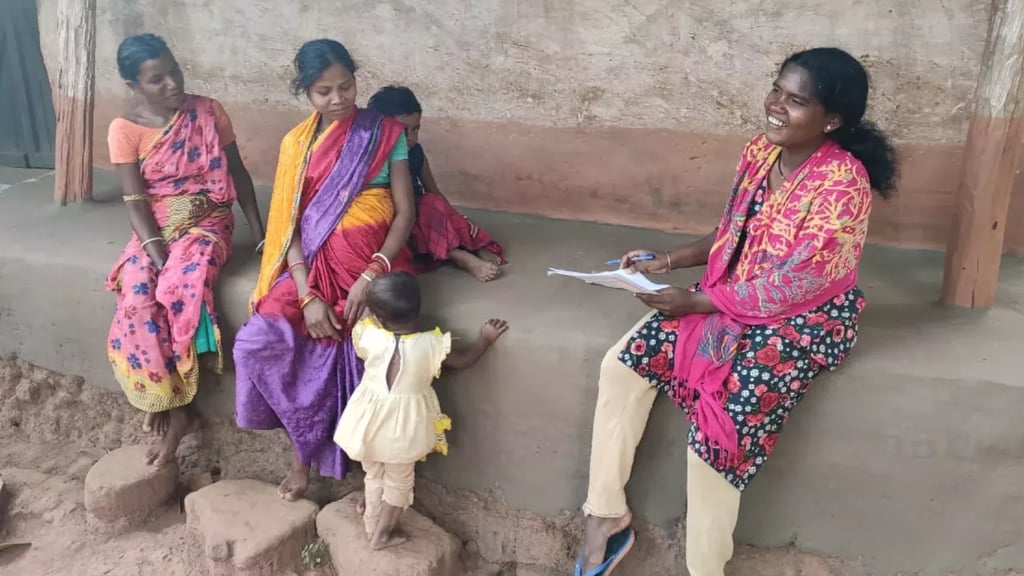
Photo Credit: unicef
How 16 Year Old Sumitra Juanga Sparked a Health Revolution in Her Tribal Village
In the forested hills of Odisha, a quiet transformation is unfolding. It did not begin with a massive government mandate or a sweeping infrastructure project. It began when a 16 year old girl looked at the deeply rooted customs of her community and started asking questions. Sumitra Juanga noticed that the women in her village were throwing away essential health supplements. She watched her peers being pulled out of school and married off to older men before they even reached adulthood. Instead of accepting this as the natural order of things, she decided to speak up. Today, her village boasts a 100 percent immunization rate among adolescent girls, a milestone achieved largely through the persistence of a single teenager.
Life in Talabaruda
The story takes place in Talabaruda, a remote settlement in the Keonjhar district of Odisha. The village is home to the Juang tribe, officially recognized as a Particularly Vulnerable Tribal Group. For generations, the community has lived in close harmony with the surrounding forests, relying on shifting agriculture and foraging for their livelihood.
In such geographically and culturally isolated areas, traditions carry immense weight. Customary practices dictate almost every aspect of daily life, from social hierarchy to healthcare. For adolescent girls, this often meant a predetermined path. Education was frequently cut short to make way for early marriages and domestic responsibilities. When community health workers visited the village to distribute Iron Folic Acid tablets to combat high rates of anemia, many women simply discarded them due to a lack of awareness or deep seated suspicion of modern medicine.
The Catalyst for Change
The turning point for Sumitra Juanga arrived through an initiative called Jiban Sampark. Supported by UNICEF and implemented locally by organizations like the Women's Organisation for Socio Cultural Awareness, the program aimed to improve maternal health, hygiene, and nutrition in tribal regions.
While external programs can introduce new resources to a village, they often struggle to change actual human behavior. People are naturally hesitant to abandon generational habits simply because an outsider suggests it. Sumitra recognized this disconnect. She understood that for the women and girls of Talabaruda to embrace healthier practices, the message had to come from someone who lived their reality.
A Teenage Advocate Steps Forward
Sumitra began her advocacy with practical, everyday conversations. She visited local schools to speak directly with other teenage girls, explaining exactly why the iron supplements were necessary for their physical development.
Her efforts quickly expanded beyond the classroom. Sumitra started approaching pregnant women in her neighborhood, urging them to attend the Village Health, Sanitation, and Nutrition Day sessions. She organized audiovisual screenings in the village to demonstrate the severe long term consequences of child marriage and the immediate benefits of basic hygiene, such as washing hands with soap.
Changing minds in a traditional society requires profound patience. Sumitra did not rely on a single speech to shift the culture. She relied on constant, gentle repetition. She answered questions, addressed fears, and consistently modeled the behavior she was advocating for.
Measurable Community Impact
The results of her grassroots leadership have been highly tangible. Handwashing with soap, once an overlooked practice, has become a standard routine in the village. Pregnant women who previously avoided medical camps now actively participate in health and nutrition sessions.
The most striking outcome of her work is the complete immunization coverage of adolescent girls in Talabaruda. Achieving a 100 percent success rate in a remote tribal village is incredibly rare and highlights the effectiveness of community led health communication.
Furthermore, the social dynamics within the village have shifted. Adolescent girls, who were historically expected to remain silent observers, have started taking active roles in community meetings. Empowered by Sumitra's example, they are now stepping forward to intervene and prevent early marriages within their own peer groups.
The Power of Internal Leadership
The broader context of this story highlights a critical lesson in rural development. For decades, public health campaigns have attempted to improve the lives of marginalized communities through external intervention. However, true societal evolution rarely happens from the outside in. It requires an internal catalyst.
Sumitra Juanga succeeded because she belongs to the Juang community. She did not approach her elders with disrespect or judgment. She approached them with a genuine desire to protect the health and future of her people. Her ability to translate complex health directives into familiar, culturally sensitive language bridged the gap between modern medical advice and traditional village life.
Conclusion
Leadership is frequently associated with formal titles, advanced degrees, or significant financial backing. The work of Sumitra Juanga proves that leadership is fundamentally about taking responsibility for your surroundings. By questioning the norms she inherited, she managed to reshape the future of the girls in her village. Her efforts remind us that significant social progress often begins with a single, courageous voice choosing to break the silence.
Related Stories
The Divine Duty © 2026
The Divine Duty shares inspiring stories, cultural heritage, documentaries, change makers, and human journeys that educate, preserve, and inspire.