
How 300 Strangers Rescued a 500-Year-Old Andhra Stepwell From Decades of Garbage
Discover how a viral video by influencer Abbayi Kanth mobilized 300 strangers to restore a garbage-choked 500-year-old stepwell in Andhra Pradesh.
Abhinav Kumar
6/9/2026
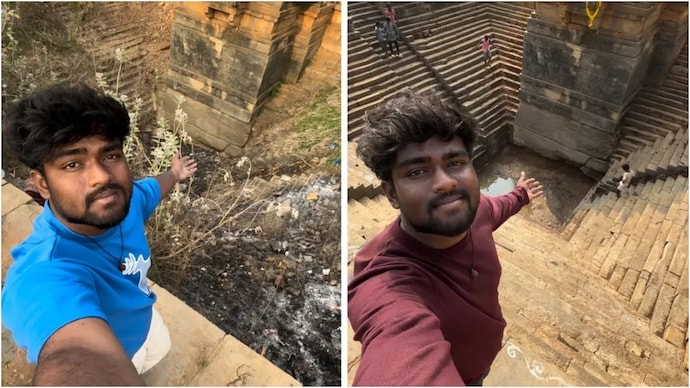
An influencer's efforts led to a mass cleanliness drive of an ancient stepwell. (Photo: Instagram)
How 300 Strangers Rescued a 500-Year-Old Andhra Stepwell From Decades of Garbage
For years, an ancient stepwell in the Nandyal district of Andhra Pradesh lay buried under layers of garbage. What was once a vital community water source and a symbol of local heritage had slowly deteriorated into a neighborhood dumping ground. It was choked with plastic waste, discarded food wrappers, and organic debris like coconut shells and temple flower garlands. The historical structure was slowly disappearing from everyday memory until a short social media video exposed what was unfolding in plain sight. What followed was an unexpected civic movement where 300 strangers arrived with gloves, tools, and a shared purpose to bring the forgotten stepwell back to life.
The Power of Digital Awareness
The transformation began when local digital creator and social influencer Telugu Abbayi Kanth decided to visit the site in Itikyala village, Peapully Mandal. Rather than just lamenting the state of the 500-year-old stepwell, he recorded a video documenting its tragic condition. The footage highlighted not only the physical filth but the quiet erasure of local heritage.
When he shared the video online, he appealed directly to the public, urging them to step forward and help restore the landmark. The video’s raw and immediate nature struck a chord far beyond the immediate village. Within days, it went viral, sparking conversations about civic responsibility and how religious offerings often contribute to the degradation of sacred or historical sites when not managed properly.
A Community-Led Restoration
The response was immediate and overwhelming. Without waiting for government intervention or official directives, more than 300 volunteers converged at the site. They organized themselves under the banner of Purva Sampada Rakshaka Sena, a collective focused on protecting neglected ancient temples, wells, and heritage structures.
The volunteers included local residents, youth groups, and many who were stepping up for the very first time. Working in coordinated shifts to ensure the cleanup was thorough, they physically climbed into the stepwell. Slowly, they cleared out the accumulated tons of plastic and organic waste. They meticulously washed the stone steps with water, carefully removing the grime to reveal the structure's original architectural form.
Preserving the Future
The effort extended beyond a single day of cleaning. Recognizing that the stepwell could easily slip back into neglect, the organizers and volunteers proactively initiated community awareness campaigns. They began engaging with locals and visitors, emphasizing the importance of responsible waste disposal and respect for shared heritage spaces.
They installed signage to reinforce the message that preserving the stepwell is a continuous, shared duty. By changing the narrative around the site, they aim to ensure that it remains a respected part of the landscape rather than a convenient place for refuse.
The Broader Impact of Civic Action
The successful restoration of the Peapully stepwell serves as a powerful reminder of what community action can achieve. Across India, countless ancient structures face similar fates, overshadowed by rapid urbanization and collective apathy. However, this initiative proves that conservation can begin with simple awareness.
The movement, driven entirely by ordinary citizens and fueled by responsible digital influence, highlights a growing desire among younger generations to actively protect their cultural identity. The once-disappearing stepwell now stands fully visible, completely transformed from a garbage dump into a testament to civic pride and unity.
Related Stories
The Divine Duty © 2026
The Divine Duty shares inspiring stories, cultural heritage, documentaries, change makers, and human journeys that educate, preserve, and inspire.