
How a Polio Survivor Brought Water Security to 64 Drought Hit Villages
Abhay Todkar overcame the physical challenges of polio to lead a massive water conservation movement, transforming 64 parched villages in Maharashtra.
Abhinav Kumar
6/14/2026
How a Polio Survivor Brought Water Security to 64 Drought Hit Villages
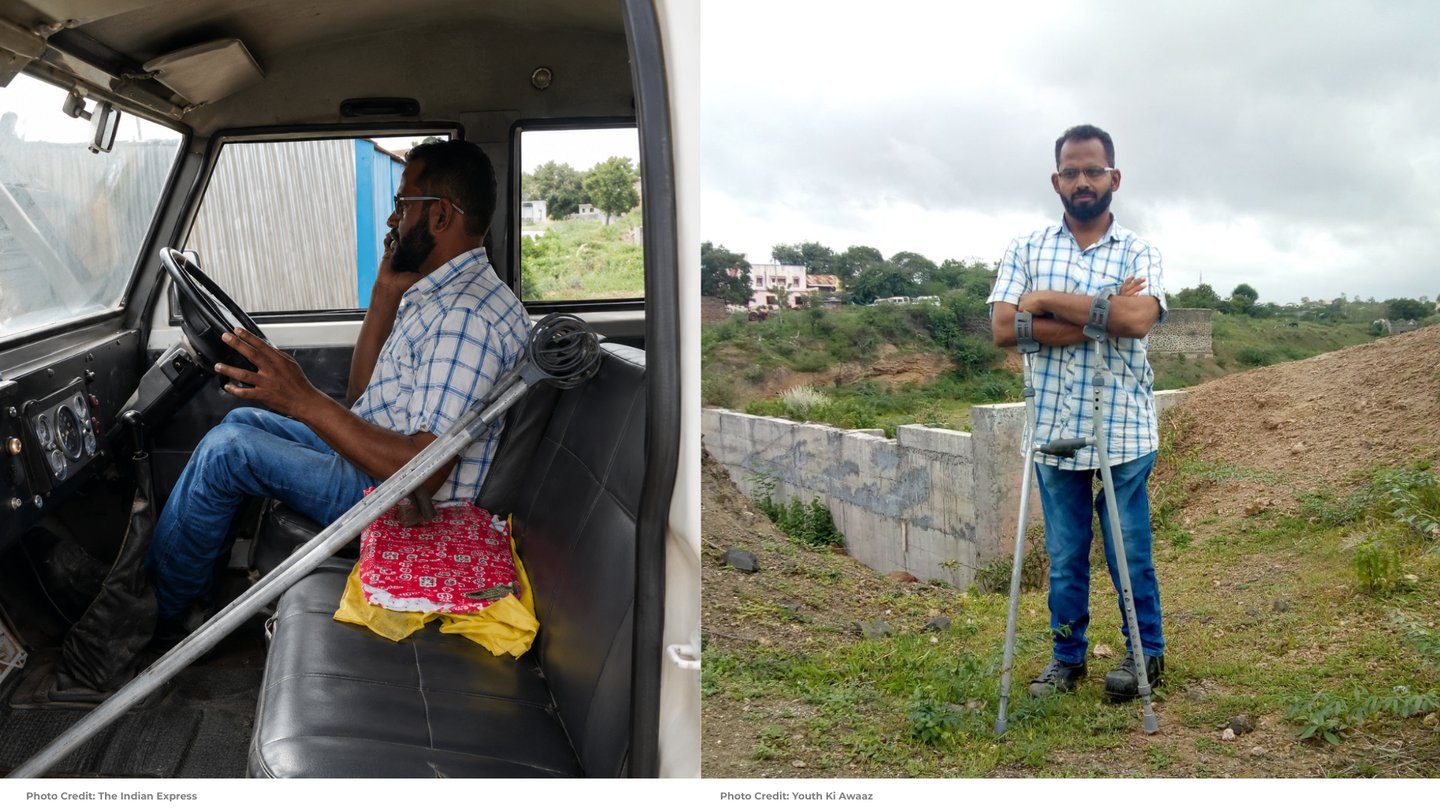
Physical limitations rarely dictate the scale of human impact. In the Satara district of Maharashtra, a man with only 25 percent mobility in his right leg and no strength in his left has orchestrated a massive environmental revival. Abhay Todkar, a 44 year old polio survivor, has successfully led a grassroots movement to bring water security to 64 drought prone villages. His work proves that sweeping regional transformations often begin with a single individual who simply refuses to accept the status quo.
The Landscape of Scarcity
The story takes place in the Man Taluka region of Satara. This specific area historically receives the lowest rainfall in the entire district. For decades, residents relied heavily on expensive water tankers to survive the harsh summer months. Farming was nearly impossible during dry spells, and the extreme scarcity frequently led to bitter, and sometimes violent, conflicts over basic daily rations of water.
Abhay grew up navigating both this arid landscape and the severe physical challenges caused by childhood polio. To support his family, he spent his early adult years travelling up to 30 kilometers a day selling biscuits and snacks to local shopkeepers. He eventually secured a small gas agency to stabilize his income, but the daily struggles of his community continued to weigh heavily on his mind.
Mobilizing a Fractured Community
The turning point arrived in 2012. Feeling exhausted by his grueling daily routine, Abhay enrolled in a youth leadership and meditation program. The practices helped him find emotional clarity and a renewed sense of purpose. He decided to redirect his energy toward solving the most urgent crisis in his region: water conservation.
In 2015, Abhay focused his efforts on Pangri Khurd, a neighboring village severely fractured by water scarcity and local disputes. He began organizing morning gatherings to discuss community development. Convincing skeptical farmers to volunteer their time was difficult. When progress stalled in another nearby village called Pingali Khurd, Abhay used a unique approach to inspire action. He invited 25 children with physical disabilities to participate in voluntary labor. Seeing these children dig trenches and move soil deeply moved the able bodied villagers, prompting them to abandon their hesitations and join the effort in large numbers.
Through sheer persistence, Abhay managed to mobilize 650 people out of a population of 1200 in Pangri Khurd alone. Together, they engaged in continuous voluntary labor for 45 days. They built deep contour trenches, a Gabion dam, and compartment barriers across the local terrain to capture rainwater.
Expanding the Impact
The results of this collective labor were immediate. The newly built structures captured the monsoon rains, allowing water to stay in the local reserves until early summer. The wells refilled, and the need for emergency water tankers dropped drastically.
Motivated by this success, Abhay expanded his vision. Between 2018 and 2024, he collaborated with local foundations and mobilized residents across 64 different villages. His teams constructed numerous check dams and promoted organic farming techniques. To ensure long term groundwater retention, they also planted over 127,000 trees across the barren landscape, turning hard soil into functional watersheds.
The Broader Context of Rural Water Management
Rural water crises in India often persist not due to a complete lack of rainfall, but because of poor storage infrastructure. Rainwater quickly runs off dry, hardened topsoil without percolating into the aquifers below. Grassroots initiatives that focus on simple, localized watershed management have proven highly effective in reversing this trend.
By involving the very people who depend on the water, the movement ensures that the infrastructure is maintained long after the initial construction is complete. When villagers build a dam with their own hands, they take permanent ownership of their local ecology.
Conclusion
The transformation of Man Taluka illustrates the profound power of community participation. Abhay Todkar did not possess immense wealth, political influence, or physical advantage. He used empathy, communication, and highly organized voluntary labor to solve a crisis that had plagued his region for generations. His leadership proves that lasting environmental change does not always require massive institutional intervention. Sometimes, it only requires a dedicated leader with the determination to start digging.
Related Stories
The Divine Duty © 2026
The Divine Duty shares inspiring stories, cultural heritage, documentaries, change makers, and human journeys that educate, preserve, and inspire.