
How Anurag Rawat Defied Cerebral Palsy to Run a 10-Kilometre Himalayan Marathon
Discover the inspiring story of Anurag Rawat. Diagnosed with cerebral palsy, he overcame societal barriers to complete a 10-kilometre high-altitude Himalayan marathon.
Abhinav Kumar
6/12/2026
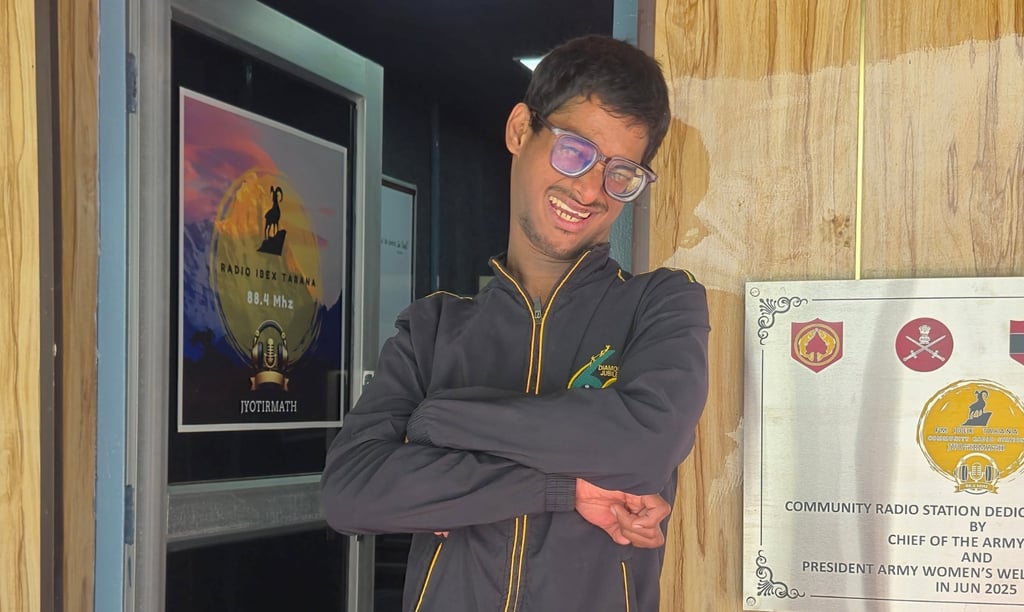
Photo Credit: IG/@_the_distinctive_
How Anurag Rawat Defied Cerebral Palsy to Run a 10-Kilometre Himalayan Marathon
Running at high altitudes demands immense physical and mental endurance. The air is thinner, oxygen levels drop, and every step requires profound exertion. For someone living with a neurological condition that affects muscle coordination and body movement, the challenge multiplies exponentially. Yet, Anurag Rawat chose to embrace this exact environment. He recently completed a 10-kilometre marathon in the rugged terrains of the Niti Valley at an altitude of nearly 12,000 feet. His accomplishment challenges deeply ingrained societal assumptions about physical disability and human potential.
A Childhood Dream Interrupted
Born to an ex-serviceman, Anurag grew up with a clear ambition. He wanted to follow in his father's footsteps and serve in the Indian Army. However, life presented a different reality early on. He was diagnosed with cerebral palsy when he was just two years old. As he grew, the physical limitations associated with his condition became more pronounced, affecting his daily mobility and coordination.
By the time he reached the eighth grade, the continuous challenges of navigating a traditional educational environment forced him to leave school. It was a devastating setback for a young boy with big aspirations. People in his community began to question his future. Many openly stated that his life lacked direction and that he would never achieve anything of substance.
Turning to the Digital World
Instead of absorbing the negativity, Anurag decided to create his own path. He realized that while his physical body had limitations, his voice and perspective did not. He turned to social media as a platform for self-expression and community building.
Without any formal training, he taught himself how to record videos, edit footage, and build digital narratives. He began documenting his daily routines. His videos were not highly polished or artificially perfect. They captured the raw reality of his life. He shared clips of himself working out in the gym, engaging in fitness challenges, and dealing with the everyday hurdles of living with his condition. The authenticity of his content slowly began to draw people in, providing a window into the daily realities of adaptive fitness.
The High-Altitude Achievement
As his physical conditioning improved, Anurag set his sights on endurance sports. He participated in various athletic events, pushing his body to adapt to rigorous physical demands. This dedication culminated in his decision to participate in a cerebral palsy marathon effort in the Himalayas.
Navigating the steep, rocky paths of the Niti Valley at 12,000 feet would exhaust even seasoned runners. Anurag completed the 10-kilometre course in one hour and forty-five minutes. Beyond this high-altitude run, he also completed a cycling journey spanning nearly 300 kilometres. These milestones proved that physical challenges could be managed through structured preparation, patience, and absolute mental discipline.
A Moment of Recognition
His dedication to fitness eventually brought him close to his childhood dream of military association, albeit in a different form. Anurag recently participated in the Shaurya Veer Run for India at the Delhi Cantonment. The event was held to mark Shaurya Diwas, a day honoring military bravery.
After the run, Indian Army Chief General Dwivedi joined Anurag on stage for a spontaneous push-up challenge. The crowd responded with thunderous applause. For a young man who once had to abandon his dream of joining the armed forces due to his physical condition, sharing a stage and a fitness challenge with the Army Chief was a deeply symbolic moment of validation.
The Broader Context of Adaptive Sports
In India, the infrastructure and cultural acceptance for adaptive sports are still in their developmental stages. People with motor disabilities often face significant barriers, ranging from inaccessible public spaces to a severe lack of specialized coaching.
Endurance events, like a high-altitude run, are rare because the initial support systems for athletes with neurological conditions are scarce. By visibly participating in these demanding physical challenges, Anurag advocates for a broader cultural shift. He proves that with proper training and willpower, individuals with different abilities can safely participate in extreme sports. His actions challenge event organizers and local sporting bodies to build more inclusive frameworks for athletes of all physical backgrounds.
Building an Inclusive Community
Today, Anurag Rawat has built an online community of over 200,000 followers. His platform serves as a vital space for disability awareness and inclusion in sports. He does not hide his frustrations or failures. By sharing both his victories and his physical struggles, he provides a realistic look at adaptive athletics.
His story matters because it actively shifts the public conversation around disability. In a society that frequently overlooks individuals with physical challenges, Anurag demands to be seen. He demonstrates that adaptive athletes belong in gyms, on marathon tracks, and on mountain trails just as much as anyone else.
Conclusion
The 10-kilometre Himalayan marathon was a massive physical feat, but the true victory lies in the years of quiet perseverance that made it possible. Anurag Rawat proves that a medical diagnosis does not have to dictate the boundaries of a person's life. True courage is found in the decision to keep showing up, even when the path is steep and the outcome is uncertain. His endurance encourages a more inclusive society where abilities are nurtured, and traditional barriers are steadily dismantled.
Related Stories
The Divine Duty © 2026
The Divine Duty shares inspiring stories, cultural heritage, documentaries, change makers, and human journeys that educate, preserve, and inspire.