
How Indian Students Are Winning Global Grants by Solving Real World Problems
Discover how Indian students are moving beyond traditional academic success to win global grants for innovations in healthcare, climate, and social inclusion.
Abhinav Kumar
6/14/2026
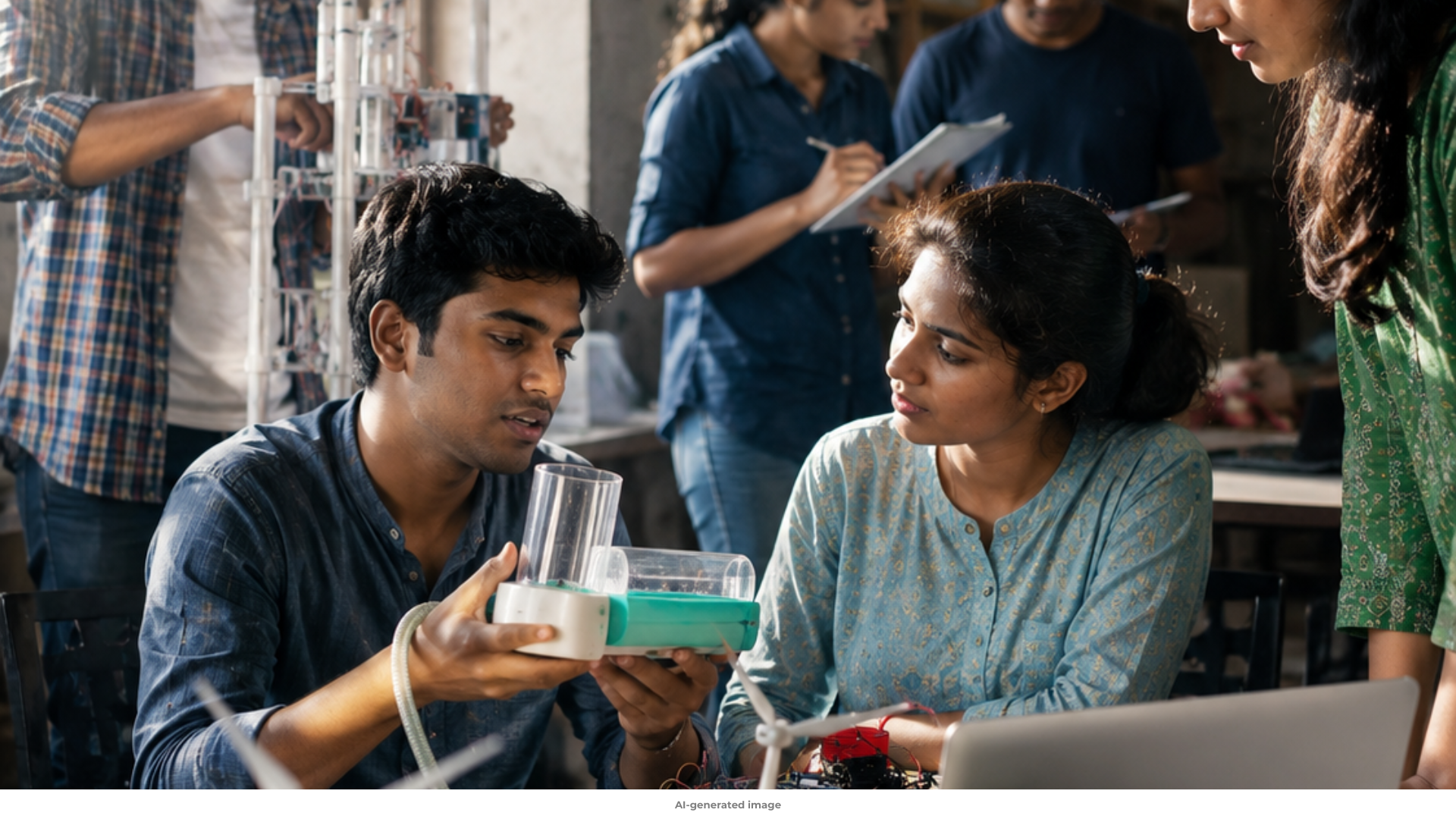
How Indian Students Are Winning Global Grants by Solving Real World Problems
For decades, the ultimate goal of the Indian education system was clearly defined. Success meant securing a high rank, clearing a competitive exam, and landing a stable corporate placement. Today, a new generation is asking a completely different question. Instead of asking how to secure a job, they are asking what systemic problem they can solve. This profound shift in mindset was on full display at the recent Social Impact Day 2026, hosted by Imperial Business School in London. Here, student entrepreneurs did not just pitch abstract business concepts; they presented functional, technology driven solutions to some of the most urgent global challenges, earning international grants and meaningful recognition.
Background
The event brought together academics, industry leaders, and young innovators from across the globe. Organized jointly by the Gandhi Centre for Inclusive Innovation and the National Indian Students and Alumni Union, the platform focused exclusively on leveraging enterprise for social progress. Several teams of student entrepreneurs stepped forward to pitch their ideas. They were not evaluated solely on revenue projections or profit margins, but on their capacity to positively impact one million lives. The top teams walked away with vital seed funding, continuous mentorship, and the resources necessary to scale their projects from academic prototypes to real world applications.
Innovating for Healthcare and Inclusion
The top grant was awarded to a project named OncoGrid, a digital cancer navigation platform. In many underserved regions across Africa and parts of Asia, patients face massive delays moving from initial symptoms to an actual diagnosis and treatment. OncoGrid uses intelligent triage, connected referrals, and accessible mobile tools like WhatsApp to coordinate care. This simple yet highly effective system drastically reduces the time patients spend lost in fragmented healthcare networks.
Other student projects targeted equally critical gaps in public health and economic inclusion. A team introduced CuraShield, a spray on coating designed to keep hospital surfaces antimicrobial for an entire year, directly addressing the silent crisis of hospital acquired infections. Another innovation, Apotek, proposed a modern pharmacy platform to track antibiotic resistance while actively lowering the cost of essential drugs. On the financial front, an initiative called Credit Saathi was developed as an artificial intelligence coach to help ordinary Indians build and understand their credit scores, opening doors to formal banking and fair loans.
Climate Resilience and Disaster Response
The student innovations also extended deeply into climate adaptation and disaster management. A project named Babaas secured funding for designing solar powered cooperative drying hubs. These hubs allow smallholder farmers to dry their cocoa beans and other crops efficiently using off grid solar energy and repurposed electric vehicle batteries. This technology prevents post harvest losses and allows rural farmers to sell their produce at full market value rather than accepting heavily discounted rates for wet crops.
Another standout concept utilized advanced technology for emergency rescue. Using artificial intelligence and seismic sensors, the students engineered a system designed to quickly and accurately locate survivors trapped beneath rubble in the chaotic aftermath of earthquakes or structural collapses.
The Impact of Global Support
These projects represent a massive departure from traditional university science fairs. When student ideas receive global social impact grants, the benefits extend far beyond the initial monetary prize. Institutions provide these young innovators with access to international networks, regulatory guidance, and sustained professional coaching. This ecosystem of support is what transforms an idea built in a dorm room into a deployable solution capable of reaching rural clinics, agricultural communities, and disaster zones.
The Bigger Picture
India currently possesses one of the largest youth populations in the world. For a long time, the dominant narrative surrounding this demographic focused heavily on the intense pressure of academic survival. While academic rigor remains important, these young entrepreneurs demonstrate that education combined with a deep social purpose creates a powerful catalyst for change. They are not waiting to accumulate decades of corporate experience before attempting to solve complex environmental or social issues. They are utilizing current technology, cross cultural collaboration, and deep empathy to address the immediate needs of marginalized communities today.
Conclusion
Age and formal authority do not dictate the capacity for impact. The students recognized on these global platforms prove that meaningful change often begins with a simple shift in perspective. By looking at a struggling healthcare system, a vulnerable farming community, or a sudden natural disaster and asking how to help, they have created solutions that will save lives and elevate livelihoods. Their journey reminds us that the most valuable outcome of education is not a degree, but the ability to leave the wider world significantly better than you found it.
Related Stories
The Divine Duty © 2026
The Divine Duty shares inspiring stories, cultural heritage, documentaries, change makers, and human journeys that educate, preserve, and inspire.