
How the Barefoot College Solar Grandmothers are Electrifying the World
Discover how the Barefoot College solar grandmothers in Rajasthan master complex engineering to bring clean energy to remote villages without formal education.
Abhinav Kumar
6/12/2026
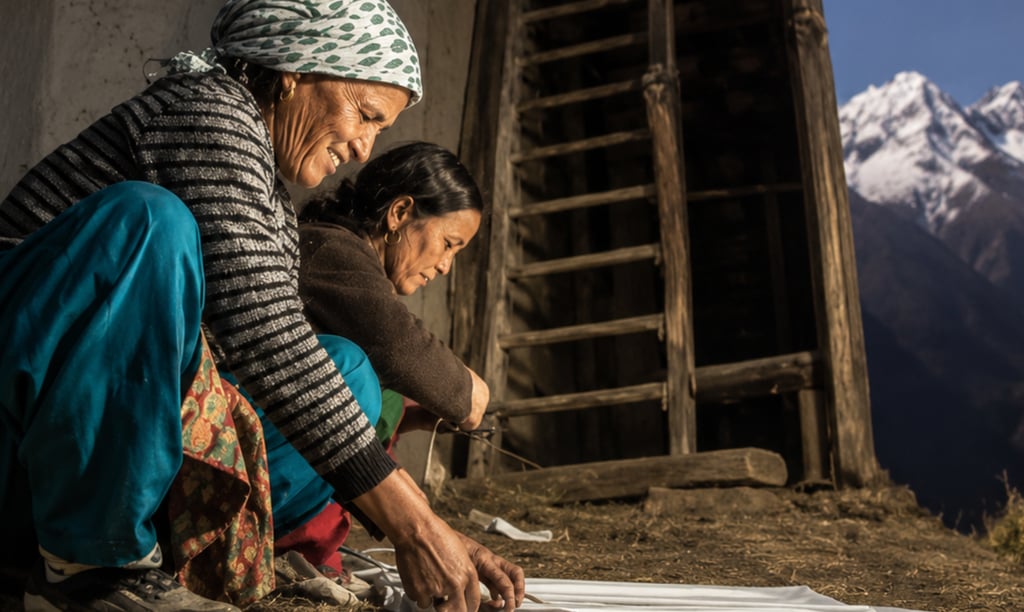
Photo Credit: Barefoot College (AI-enhanced image)
How the Barefoot College Solar Grandmothers are Electrifying the World
We often measure expertise by the weight of a university degree. Society conditions us to believe that complex technological problems require highly educated specialists sitting in urban laboratories. In the rural district of Ajmer in Rajasthan a quiet village called Tilonia proves otherwise.
Here women who have never entered a formal classroom are mastering complex circuitry to build solar panels. They are known globally as the Barefoot College solar grandmothers. By rejecting conventional educational standards these rural women have successfully brought clean electricity to some of the most isolated communities on earth.
The Philosophy of Tilonia
The foundation for this initiative was laid in 1972 when educator Sanjit Bunker Roy established a civil society organization designed to make marginalized communities entirely self sufficient. He believed that the solutions to rural development problems were already present within the communities themselves.
The campus in Tilonia was built using local materials and traditional knowledge. The central philosophy was simple but profound. It stated that basic practical wisdom often holds more value than academic theory. This belief eventually gave birth to a highly unconventional engineering program designed to demystify renewable energy for those living entirely off the power grid.
The Strategic Choice of Older Women
When the organization began its solar training program it faced a common rural dilemma. If you train a young person in advanced technical skills they almost inevitably migrate to a major city to seek better employment. The knowledge leaves the village and the community remains dependent on outside help.
To counter this urban migration the organization made a strategic choice to train older women. Grandmothers have deep roots in their communities. They have no desire to leave their families or migrate for corporate jobs. By investing in them the college ensured that the engineering knowledge remained exactly where it was needed most.
Learning Without a Shared Language
Bringing women from different states and eventually different countries to Rajasthan presented an immediate communication barrier. Most of the trainees were entirely illiterate. They shared no common spoken language with their Indian instructors.
To solve this the Barefoot College solar grandmothers learn entirely through visual and tactile instruction. During the six month residential course trainees identify resistors capacitors and complex wiring through specific color codes and shapes.
They watch master trainers perform a task and then replicate it using their own hands. They learn to solder circuits and assemble solar charge controllers through pure repetition and physical memory. This process proves that paper qualifications are completely unnecessary for mastering sophisticated renewable energy systems.
From Kerosene to Clean Light
Before these interventions remote villages relied heavily on kerosene lamps for light after sunset. Kerosene is expensive and highly toxic to breathe in closed spaces. A typical rural family relying on kerosene burns dozens of liters a year generating massive indoor pollution and regular fire hazards.
Once the training in Tilonia is complete the women return to their native villages equipped with the necessary tools and spare parts to establish a local electronic workshop. They install solar lighting systems in hundreds of local houses replacing toxic fumes with clean renewable light.
More importantly they maintain and repair these systems independently. The villagers pay a small monthly fee for the maintenance equivalent to what they used to spend on candles and fuel. This provides the newly trained engineers with a steady dignified income and ensures the long term survival of the solar micro grid.
A Global Network of Solar Engineers
What began as a local solution in Rajasthan has expanded into an immense international network. Over the last two decades the initiative has trained over 1700 women from 96 different countries.
Women from remote villages in Senegal Madagascar Guatemala and Fiji have traveled to India to master these skills. Many of them had never left their hometowns or boarded an airplane before making the long journey to Tilonia. They arrive from conflict zones and impoverished regions often facing deep skepticism from their local societies.
Many arrive with low self esteem having been told for decades that their only role was domestic labor. Yet they leave Tilonia completely transformed. As they install solar panels and repair circuit boards they realize their own immense value.
When they return home as fully capable solar engineers they command newfound respect. They transform their communities while fundamentally altering the traditional gender dynamics of their societies. Women who were previously marginalized are now leading their villages into the modern energy era.
Redefining Human Potential
This initiative forces a total reevaluation of human capability. It proves that the transition to clean energy does not solely depend on massive corporate infrastructure or elite academic institutions.
Sometimes the most effective climate solutions are driven by those who are routinely underestimated. The Barefoot College solar grandmothers stand as living proof that dignity practical knowledge and a willingness to serve are the only true requirements for driving meaningful social change.
Related Stories
The Divine Duty © 2026
The Divine Duty shares inspiring stories, cultural heritage, documentaries, change makers, and human journeys that educate, preserve, and inspire.