
How Young Students Are Leading Temple Preservation in Nepal
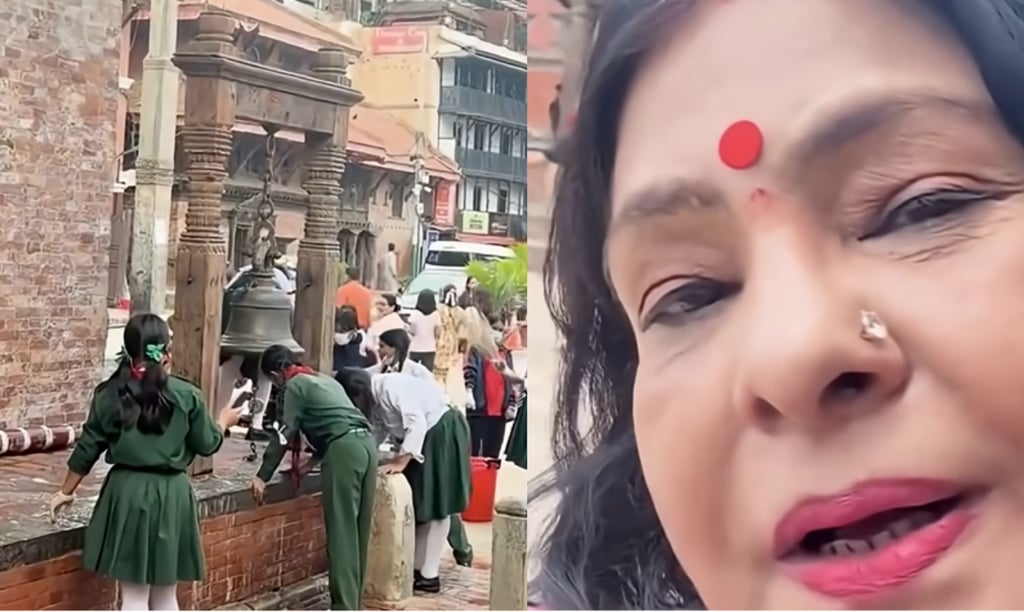
A viral video shared by Malini Awasthi captures Nepali schoolgirls taking charge of temple preservation in Nepal by cleaning a traditional heritage site.
Abhinav Kumar
6/10/2026
Source: IG/@maliniawasthi
How Young Students Are Leading Temple Preservation in Nepal
Historical monuments are often treated as static objects from the past. People expect official authorities or specialized organizations to maintain them. Yet, a recent moment captured on video proves that the true guardians of history are often the people who walk past it every day. In a quiet but powerful display of civic duty, a group of young schoolgirls demonstrated the true meaning of temple preservation in Nepal. They decided not to wait for a municipal cleaning crew or a government initiative. Instead, they took full responsibility for their local heritage themselves.
The Power of Digital Observation
The act of civic responsibility was brought to a wider global audience when Indian folk singer and cultural advocate Malini Awasthi shared the footage on social media. Awasthi, known for her dedication to folk traditions and cultural roots, recognized the deeper significance of the scene. The video documented the young students actively cleaning a traditional temple complex before or after their school hours.
Their effort highlighted a profound sense of ownership over their community spaces. In an era where digital content often focuses on entertainment, this simple recording captured raw, unprompted community service. It showed young people engaging directly with their physical environment and taking pride in their shared history.
The Quiet Work of Temple Preservation
Dressed in their everyday school uniforms, complete with skirts and ties, the students organized a highly effective collective cleanup effort. They did not have specialized equipment or professional cleaning supplies. They carried heavy buckets of water across the uneven stone courtyards. They knelt on the hard ground to scrub the temple surfaces by hand.
Working in complete unison, they meticulously washed away accumulated dust, dirt, and daily debris. There was no official mandate driving their actions. No teacher or civic leader appeared to be forcing them to complete the task. They simply saw a need within their community and stepped up to address it.
By physically cleaning the intricate wood carvings, stone figures, and wide brick steps of the temple, the girls demonstrated an immediate, tangible connection to their cultural surroundings. They transformed a routine chore into an act of deep cultural respect.
The Impact of Student Leadership
The manual effort carried out by these young students carries significant weight for the future of regional conservation. It fundamentally shifts the narrative around who is responsible for public spaces. Often, the protection of ancient architecture is viewed as a purely bureaucratic task. People assume it requires specialized funding, international grants, and strict institutional oversight.
These schoolgirls showed that while institutional support is certainly necessary for major structural repairs, the daily survival of a monument relies on local love and attention. Their initiative reflects a mature level of civic responsibility at an incredibly early age. By stepping up to maintain a place of cultural importance, they set a highly visible example for adults and peers alike. They proved that age is not a barrier to taking meaningful civic action.
The Broader Context of Community Spaces
Nepal is celebrated globally for its dense concentration of historic temples, sacred shrines, and public squares. The Kathmandu Valley alone holds an extraordinary amount of living history. While prominent global heritage sites receive significant attention, tourism revenue, and government resources, thousands of smaller neighborhood temples form the actual cultural spine of the country.
Historically, these local structures were never maintained by distant governments. They were sustained by local community trusts and neighborhood volunteers. The local residents considered the temple an extension of their own homes.
As urbanization rapidly increases and modern lifestyles demand more time, there is a constant risk of these localized traditions fading into obscurity. When the younger generation actively participates in maintaining these sacred spaces, it ensures that the cultural chain remains unbroken. Their participation bridges the gap between historical reverence and modern civic action, keeping the ancient traditions alive in a contemporary setting.
Conclusion
The video shared by Malini Awasthi has resonated with thousands of viewers because it captures a universal truth about public and community spaces. Monuments only survive when they remain relevant and respected by the people living directly around them. The responsibility to protect our shared history does not rest entirely on the shoulders of governments or historical societies. It belongs to the citizens.
Authentic temple preservation in Nepal, and anywhere else in the world, is driven by the community. These schoolgirls remind us that we do not need grand gestures or massive funds to make a difference. Preserving a culture often begins with nothing more than a bucket of water, a willing pair of hands, and a simple, consistent act of care.
Related Stories
The Divine Duty © 2026
The Divine Duty shares inspiring stories, cultural heritage, documentaries, change makers, and human journeys that educate, preserve, and inspire.