
The IFS Officer Who Planted 1.5 Million Trees and Helped Shape Bengaluru's Green Identity
IFS officer Seturam Neginhal helped plant 1.5 million trees across Bengaluru, creating a lasting urban forest that continues to define the city today.
Abhinav Kumar
6/13/2026
The IFS Officer Who Planted 1.5 Million Trees and Helped Shape Bengaluru's Green Identity
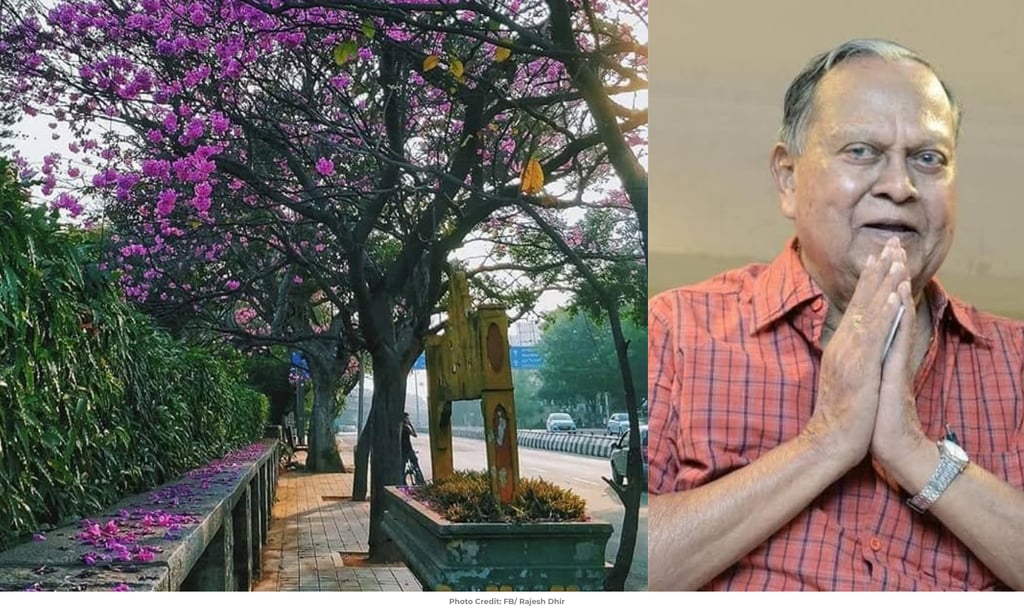
Every year, as summer arrives in Bengaluru, entire streets seem to change color.
Pink blossoms spill across roads, footpaths, and neighbourhoods. Residents stop to photograph them. Visitors wonder where they came from. Social media fills with images of tree-lined avenues that appear painted by nature itself.
What many people do not realize is that these seasonal blooms are part of a much larger story.
Decades before climate resilience, urban sustainability, and green infrastructure became common policy discussions, one Indian Forest Service officer was quietly reimagining the future of a growing city.
His name was Seturam Gopalrao Neginhal.
Over five years, he helped plant more than 1.5 million trees across Bengaluru, creating a green legacy that continues to influence the city more than four decades later.
A City Growing Faster Than Its Trees
The Bengaluru of the early 1980s looked very different from the technology hub known today.
The city was expanding rapidly. New roads were being built. Residential layouts were spreading outward. Population growth was accelerating.
Development brought opportunity, but it also came at a cost.
Trees were increasingly being cut to make room for wider roads and new infrastructure. Bengaluru's reputation as India's "Garden City" was beginning to face pressure from urbanization.
Authorities attempted tree-planting drives, but many saplings failed to survive. Planting trees was relatively easy. Ensuring that they lived long enough to become part of the urban landscape was the real challenge.
This was the problem Neginhal decided to address.
Planting Trees Was Not the Goal
What distinguished Neginhal's approach was that he did not treat tree planting as a numbers exercise.
Before selecting species, he spent time walking through neighbourhoods, studying local conditions, observing soil quality, sunlight patterns, and road layouts. Different locations required different solutions.
His philosophy was simple.
A tree planted in the wrong place would eventually fail. A tree planted thoughtfully could serve generations.
Among the species he introduced extensively was Tabebuia rosea, known today for the pink blossoms that have become one of Bengaluru's most recognizable seasonal sights. These trees were chosen not only for their beauty but also for their ability to provide shade and adapt to urban environments.
But selecting species was only the beginning.
Engineering Survival
One reason many urban plantations fail is that young saplings are vulnerable.
They face damage from traffic, animals, construction activity, and neglect.
Instead of relying on expensive infrastructure, Neginhal designed low-cost bamboo and mesh tree guards that protected young trees while remaining affordable enough for large-scale use.
He also understood something many environmental initiatives overlook.
People protect what they feel connected to.
Residents were invited to participate in the process. In several neighbourhoods, volunteers and local citizens were consulted about the types of trees they wanted planted near their homes and streets.
Urban forestry became a shared responsibility rather than a government project alone.
Five Years That Changed Bengaluru
For five years, Neginhal and his teams worked consistently across the city.
Many plantation activities took place at night along busy roads to avoid disrupting daily life. The work was methodical rather than dramatic.
Street after street.
Neighbourhood after neighbourhood.
Sapling after sapling.
By the end of the effort, more than 1.5 million trees had been planted across Bengaluru.
The achievement was significant not merely because of the number.
It was significant because many of those trees survived.
Today, decades later, they continue to provide shade, absorb pollution, reduce urban heat, support biodiversity, and contribute to the city's character.
Creating an Urban Forest Before Climate Change Became a Global Concern
Modern cities increasingly discuss climate adaptation.
Urban planners now emphasize green corridors, tree canopies, biodiversity networks, and cooling infrastructure.
Neginhal's work anticipated many of these conversations years before they became mainstream.
According to accounts of his work, the plantation efforts contributed to the creation of a protective green belt around Bengaluru and strengthened the city's ecological resilience during a period of rapid expansion.
At the time, the language of climate action was not widely used.
Yet the practical benefits were already evident.
More trees meant lower surface temperatures, improved air quality, habitat for birds and insects, and a more livable urban environment.
Why the Pink Blossoms Matter
The pink blooms of Tabebuia rosea have become social media attractions in recent years.
Photographs often focus on their beauty.
The deeper story lies in what they represent.
Every flowering season is evidence of long-term thinking.
A tree planted in the 1980s offers benefits today because someone planned beyond immediate results.
Urban development is often measured through buildings, highways, investment figures, and construction projects.
Trees operate on a different timeline.
Their impact becomes visible years later.
The shade enjoyed by one generation is frequently created by decisions made by another.
Lessons for Modern Cities
Bengaluru's experience remains relevant across India.
Many cities continue to balance development needs with environmental concerns. Road expansion, infrastructure projects, and population growth often place pressure on existing green cover.
Recent reports indicate that thousands of trees continue to be removed for infrastructure development in Bengaluru and other urban centres, highlighting the ongoing challenge of protecting urban ecosystems while accommodating growth.
Neginhal's work offers an important lesson.
Successful urban forestry is not simply about planting large numbers of saplings.
It requires species selection, community participation, protection mechanisms, maintenance, and long-term planning.
Planting a tree is an event.
Growing an urban forest is a process.
A Legacy That Still Blooms
Many public works are eventually replaced.
Roads are resurfaced, buildings are renovated, and policies change over time. Trees, however, are different.
They continue growing long after the people who planted them have moved on.
Today, when Bengaluru's avenues turn pink each summer, most people see a beautiful seasonal phenomenon.
What they are also seeing is a decades-old vision still alive in the landscape.
More than forty years after the first saplings were planted, the city continues to benefit from choices made with patience, ecological understanding, and an unusually long view of the future.
Conclusion
The story of Seturam Neginhal is not simply a story about planting 1.5 million trees.
It is a story about designing a city that future generations could inherit.
His work demonstrates that environmental stewardship is often less about grand announcements and more about consistent action sustained over time.
The trees he helped plant continue to cool streets, support biodiversity, and shape Bengaluru's identity.
Every season they bloom, they remind the city that some of the most important public works are the ones still growing decades later.
Related Stories
The Divine Duty © 2026
The Divine Duty shares inspiring stories, cultural heritage, documentaries, change makers, and human journeys that educate, preserve, and inspire.